
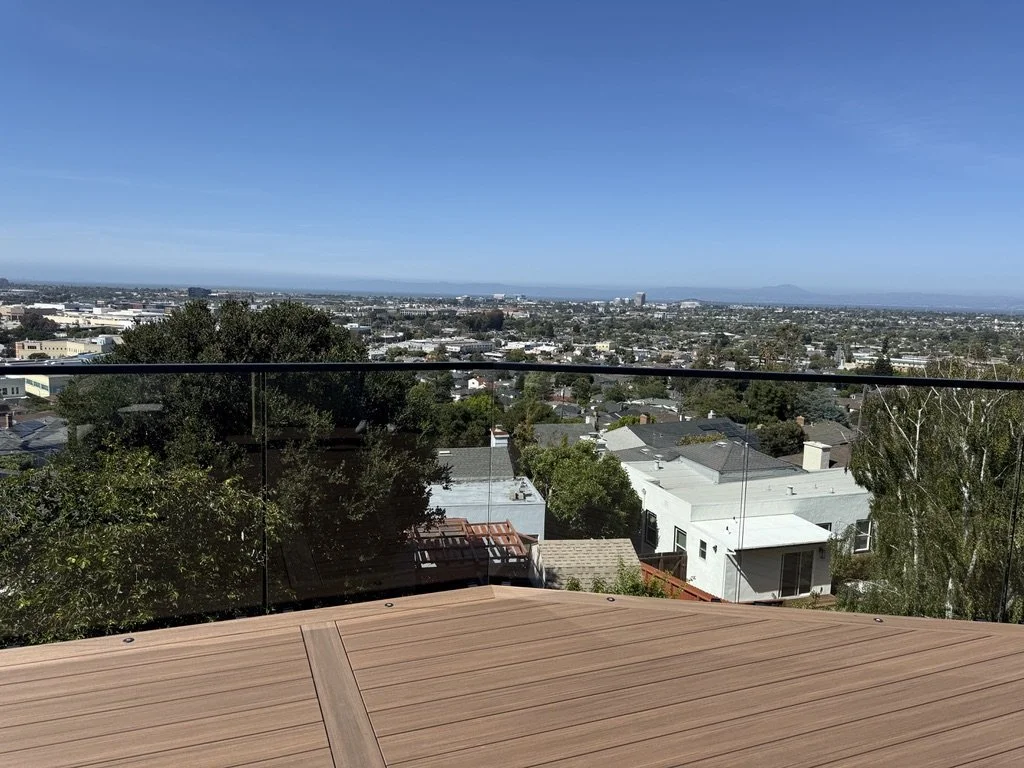
Steel-Frame & Fire-Resistant Decks in the Bay Area

We specialize in Fortress Evolution steel framing with Mbrico reinforced porcelain decking, with aluminum, concrete and selected composite systems available where they better fit the project.

Atherton

|

Hillsborough

|

San Mateo

|

Marin

|

Sonoma

|

Atherton | Hillsborough | San Mateo | Marin | Sonoma |

Why Wood is Not One of Our Options

Most decks in the Bay Area are built with short-term materials and surface-level thinking. They look good at first, then fail at the structure, the waterproofing, or the material itself.

Harmonia Builders approaches deck construction differently.

We build custom decks as long-term structural systems, using fire-resistant materials and construction methods designed to perform in California’s climate and fire-prone environments.
Deck Materials Compared

The major decking options, side by side. Compare cost, maintenance, fire performance, heat, fading and expected service life, then expand any row for more detail.

Install cost
Maintenance
Fire rating
Heat in sun
Fades in sun
Lifespan
30-yr cost
Porcelain Tile
Large-format tile on adjustable pedestals or aluminum tracks over the frame.
Install cost
$$$
Maintenance
None
Fire rating
Excellent
Heat in sun
Cool
Fades in sun
No
Lifespan
50+ yrs
30-yr cost
Low
▼ Expand detail
Maintenance & weathering
An impervious surface. Hose it off or mop it. Nothing to seal, stain or refinish, and no board replacement cycle. The color is fired into the tile rather than applied to it, so it does not fade, chalk or stain in sun.
Fire, heat & installation
Noncombustible and Class A rated. Light colors stay cool underfoot in direct sun, so the same tile suits a full-sun deck and a shaded one; dark charcoal and slate tones warm up more at midday.
Tile is unforgiving of a frame that moves, so it wants a stiff, dimensionally stable structure (we use steel) and careful attention to drainage and to the transition at doors and at the deck edge.
Brand examples
Among the highest install costs in decking, with the lowest ongoing cost of any surface here. Homeowners generally choose it for a stone or tile appearance, zero upkeep, and the best 30-year number on a house they plan to keep.
Aluminum Decking
Extruded, powder-coated planks that interlock into a sealed or ventilated surface.
Install cost
$$$
Maintenance
None
Fire rating
Excellent
Heat in sun
Cool
Fades in sun
No
Lifespan
50+ yrs
30-yr cost
Low
▼ Expand detail
Maintenance & weathering
A non-porous surface that asks for nothing beyond an occasional rinse. No sealing, no staining, no board replacement under normal use. The powder-coated finish holds its color and does not chalk in sun.
Fire, heat & installation
Noncombustible and Class A rated, which makes it straightforward to specify in a WUI zone. Aluminum sheds heat quickly and light-colored profiles stay comfortable barefoot in full California sun.
Interlocking systems can be detailed to drain water away from the framing, which is useful over a patio or storage below. Cut ends and fasteners need attention so the coating is not compromised, and the planks telegraph a frame that is out of plane.
Brand examples
No replacement cycle is expected within the life of the structure. Homeowners generally choose it for a plank look with noncombustible performance, a cool surface, and very little weight on the frame.
Concrete Decking
Prestressed concrete planks cast with a board-formed wood grain, installed like lumber.
Install cost
$$–$$$
Maintenance
Low
Fire rating
Excellent
Heat in sun
Cool
Fades in sun
Finish-dependent
Lifespan
50+ yrs
30-yr cost
Low
▼ Expand detail
Maintenance & weathering
The plank does not rot, warp, splinter or burn, and routine care is rinsing or an occasional wash. Left natural it is concrete gray and weathers the way concrete does. Stained, it takes wood tones and reads close to a wood deck from a few feet away.
The finish is a separate question from the plank. Stains, dyes, paints and sealers are the part that wears, fades and gets renewed, so how often you touch the deck depends on the finish you choose rather than on the concrete under it. A deck left natural gray has nothing to renew. LumberCon recommends a silicone-based concrete sealer after install, and again after staining.
Fire, heat & installation
Concrete is noncombustible: it does not ignite or feed a fire, and LumberCon publishes an ASTM E84 result of Class A, flame spread 0. Worth being precise about what that is and is not. It is the material's inherent behavior, not a California WUI listing. LumberCon does not currently appear in the State Fire Marshal's WUI Listed Products handbook, and noncombustible construction is a separate compliance path under Chapter 7A, so on any specific job we confirm the approach with the building department rather than leaning on a listing.
Concrete carries heat differently than a synthetic board. It tends to track ambient temperature rather than build heat, though a dark stain will change that. The real planning item is weight: the planks run roughly 13 to 17 lbs per square foot, many times what a composite or aluminum surface weighs, so the framing and footings are designed around the surface from the start. Cutting takes a masonry or diamond blade. Spans are generous, 5 to 6 ft for a 2 in plank, which changes how the frame below is laid out.
Brand examples
LumberCon quotes its planks near composite pricing and warrants them for 25 years residential against an engineered service life of 50 or more. The planks are cast with a wood grain and can be left natural gray or stained in wood tones, so the deck can read as weathered gray or as something close to redwood depending on the finish. Homeowners generally choose it when they want the look of a wood deck from a material that does not burn, rot or need replacing.
PVC / Cellular PVC
All-polymer boards with no wood content.
Install cost
$$–$$$
Maintenance
Low
Fire rating
Varies by line
Heat in sun
Moderate
Fades in sun
Slight
Lifespan
30–50 yrs
30-yr cost
Low
▼ Expand detail
Maintenance & weathering
A non-porous surface that cleans easily, with no sealing or staining required. It fades less than composite, and AZEK backs that with a lifetime limited warranty and 50-year fade and stain coverage.
Fire, heat & installation
Fire rating depends on the line. AZEK Vintage, AZEK Landmark and Fiberon Paramount are Class A and WUI-listed; AZEK Harvest is Class B; some PVC lines carry no listing at all. We verify the specific listing before specifying it in a fire zone.
TimberTech's Advanced PVC lines run up to 30°F cooler than comparable composite, though still warmer than aluminum, porcelain or concrete in full sun. PVC moves more with temperature than composite does, so gapping and fastening details matter more, not less.
Brand examples
Costs more than composite, and the Vintage line costs about what porcelain does. Homeowners generally choose it where moisture resistance and color retention matter most and a wood-grain look is still wanted.
Composite Decking
Wood flour and polymer boards, usually with a capped wear surface.
Install cost
$$
Maintenance
Low
Fire rating
Varies by line
Heat in sun
Moderate
Fades in sun
Yes
Lifespan
25–30 yrs
30-yr cost
Moderate
▼ Expand detail
Maintenance & weathering
Occasional cleaning with soap and water. No sealing, staining or board replacement under normal conditions, which is a real improvement over wood. Expect some fading in the first season, and darker colors to lighten noticeably over the years.
Fire, heat & installation
Fire performance depends entirely on the line. We install composite only where the specific product is Class A or WUI-listed, and we verify the listing before specifying it in a fire zone.
Surface temperature can run 20 to 50°F above air temperature in direct sun. Lighter board colors help. Boards expand and contract with temperature, so gapping, fastener choice and the length of a run all matter, and full-sun south-facing decks are usually better served by porcelain, aluminum or concrete.
Brand examples
One replacement cycle is likely at the 25 to 30 year mark. Homeowners generally choose it for the familiar wood-grain look and the lowest entry price among the low-maintenance surfaces.
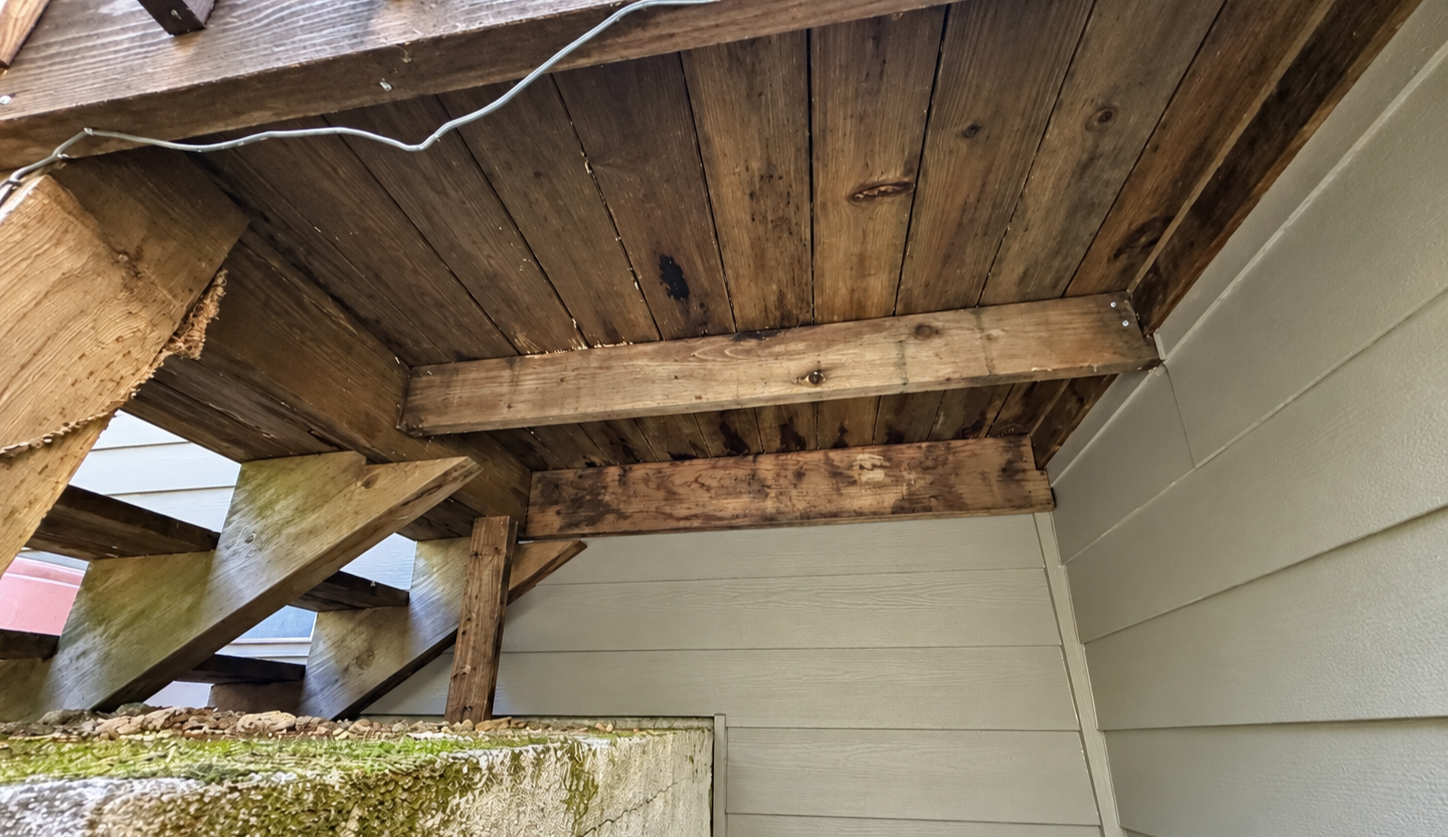
Pressure-Treated Wood
The conventional baseline. Lowest entry cost, highest 30-year cost.
Install cost
$
Maintenance
High
Fire rating
Poor
Heat in sun
Cool
Fades in sun
Grays
Lifespan
10–15 yrs
30-yr cost
Highest
▼ Expand detail
Maintenance & weathering
Grays within a season in Bay Area sun and needs refinishing every 2 to 3 years to resist moisture, graying and splitting. Board replacement begins within 5 to 10 years, and decks that skip the sealing, or sit in shade or over damp ground, are often replaced at 7 to 10. NADRA estimates roughly 30 million decks in North America have outlived their service life and recommends an inspection for any deck over 15 years old.
Fire, heat & installation
Combustible whatever the listing. Ordinary pressure-treated pine is unrated; some solid-wood decking is WUI-listed as Class B, and the California code does permit it. A wood board over a wood joist is still exactly what an ember needs, which is the disqualifier on most Bay Area hillside properties.
Surface temperature in direct sun is moderate, cooler than most synthetic boards. Fastening and flashing details are what determine whether the frame below lasts, and they are where most failed wood decks actually fail.
Where we stand
It belongs in this comparison because it is the baseline almost every homeowner is quoted against, and the honest cost comparison only works if it is here.
Harmonia does not build new wood-framed decks and does not offer pressure-treated decking. Once maintenance, board replacement and likely full replacement are counted, the 30-year cost of a wood deck consistently exceeds the install cost of a durable alternative. We don't build what we'd have to rebuild.

Install cost is relative: $ is the lowest in the category, $$$ the highest. Lifespan and 30-year cost assume Bay Area exposure and normal residential use. Fire ratings and WUI listings are product-specific, and we verify the listing for the exact line before specifying it on a job in a fire zone.

Built Beyond the Surface

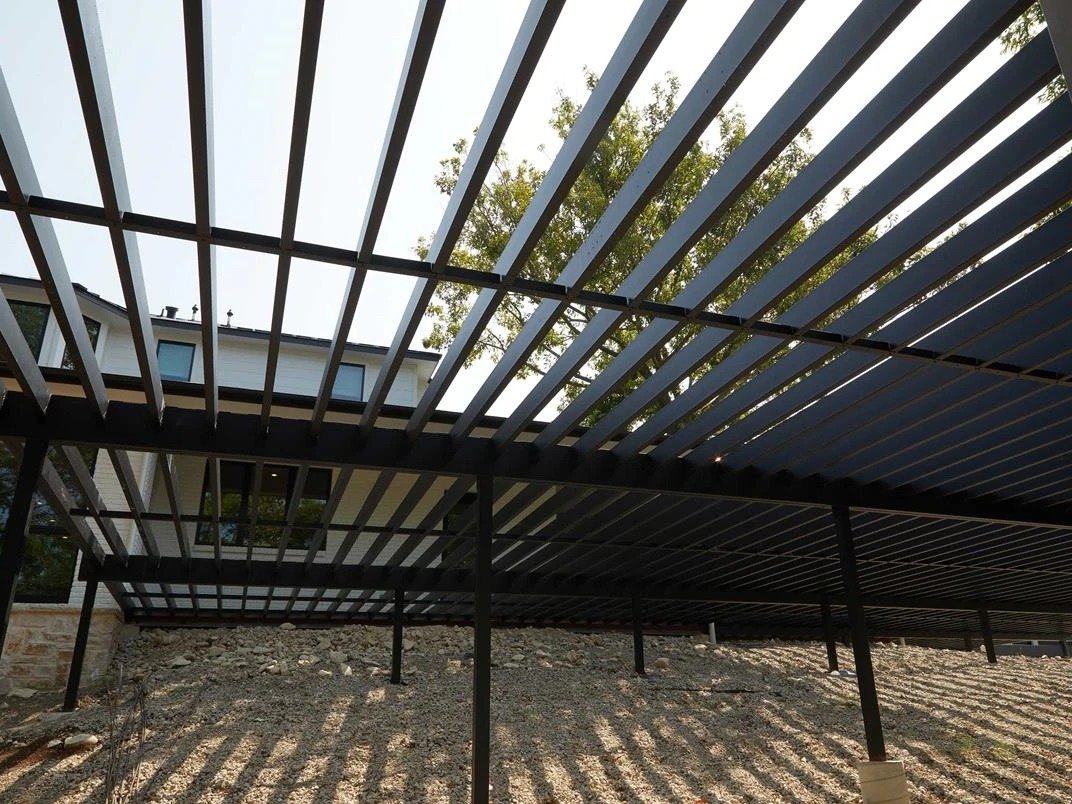
  • Looking up through a Fortress Evolution steel deck frame, black steel joists on beams and posts, before the surface goes on

    Steel Framing That Lasts

    Fortress Evolution galvanized, powder-coated steel joists, beams and posts. Steel does not rot, warp, or feed a fire, and it does not need replacing when the surface does.

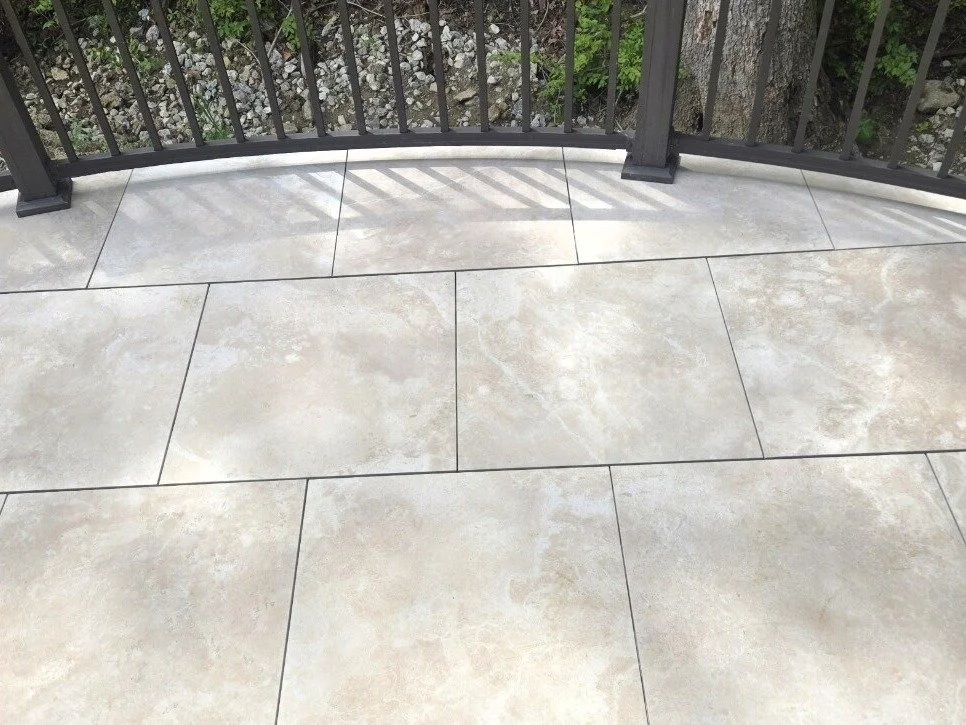
  • Mbrico porcelain tile deck surface with a curved edge and black metal picket railing, ground visible below

    Fire-Resistant Materials

    Porcelain, aluminum and concrete surfaces that do not burn: non-combustible from the surface down, no sealing, no staining, no board replacement. Composite only where the specific line carries the fire performance the jurisdiction requires.

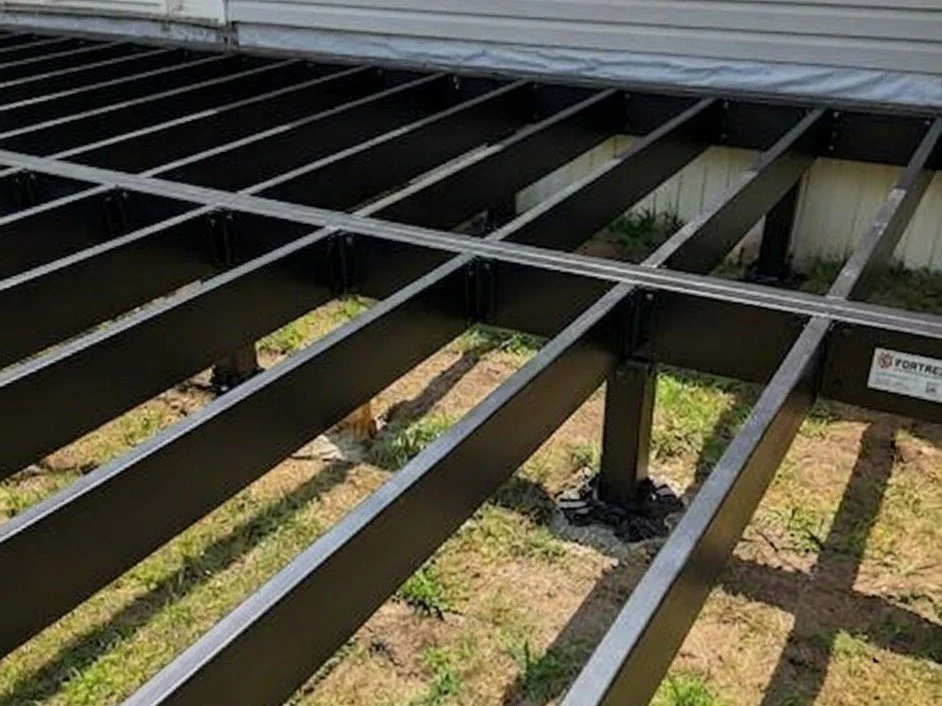
  • Freestanding Fortress Evolution steel deck frame with the beam carried on its own posts beside the house, no ledger board attached to the wall

    Freestanding by Default

    Our decks stand on their own posts and piers with a gap to the house. No ledger board means nothing bolted through your siding, nothing trapping water against the framing, and nothing rotting where you cannot see it.

Brands & Systems We Build With

Fire-Resistant Deck Construction for California Homes

In Marin, Sonoma and the Peninsula hills, fire-resistant construction is no longer optional. We build decks on non-combustible steel framing, with surfaces selected to meet California’s Wildland-Urban Interface requirements (formerly Chapter 7A) for the specific project and jurisdiction, and we do it without giving up the finish you want.

01

Who builds fire-resistant decks in the Bay Area?

Harmonia Builders specializes in fire-resistant deck construction using advanced materials and structural systems designed for long-term performance in high-risk environments.

02

How do you replace a wood deck with a fire-resistant system?

We:

  • Evaluate the existing structure

  • Reinforce or rebuild framing as needed

  • Install non-combustible decking materials

  • Ensure proper waterproofing and code compliance
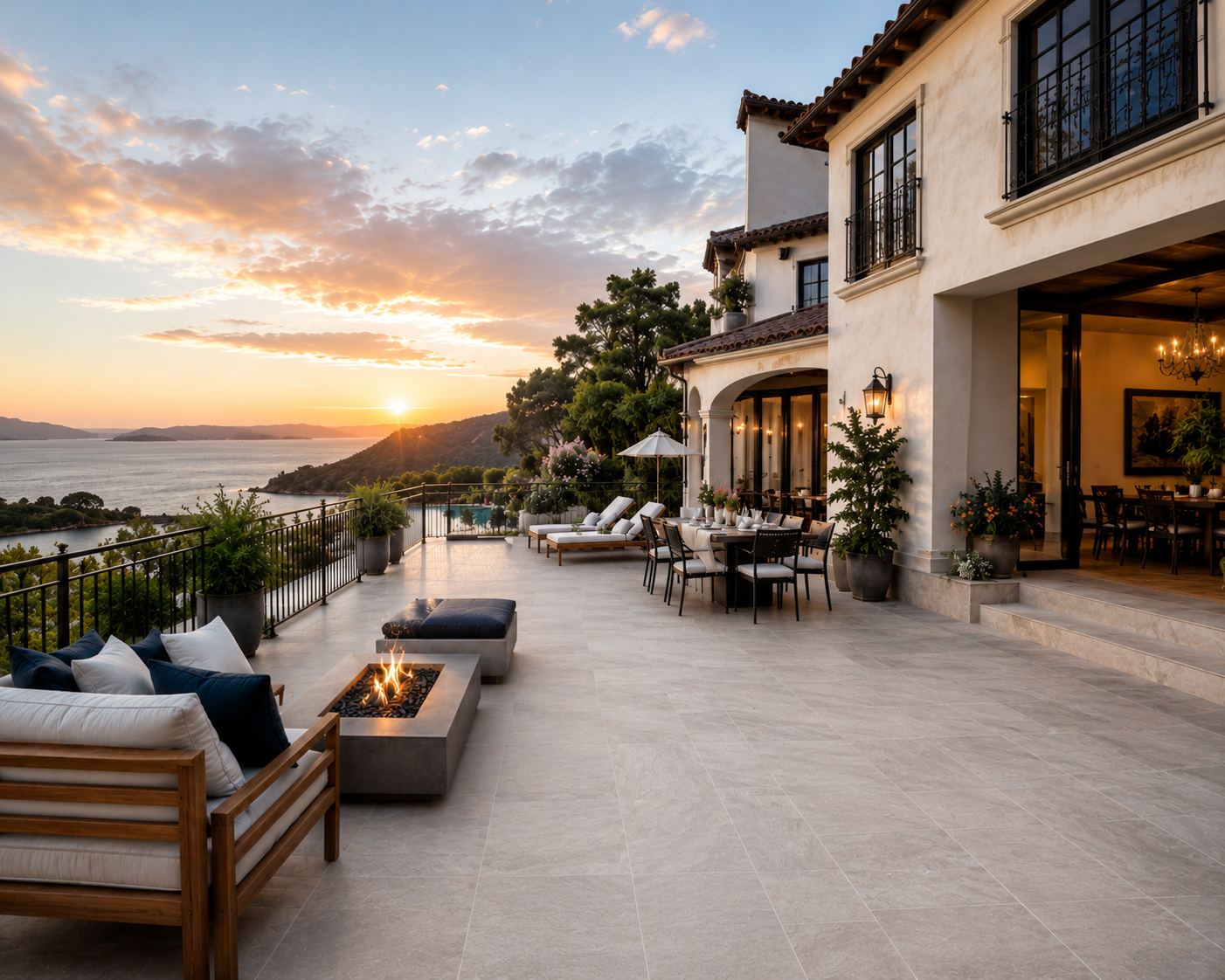
Luxury house with spacious balcony overlooking water and hills at sunset, furnished with outdoor seating, dining area, and decorative plants.

How We Build Custom Decks

01 Consultation & Site Review

Evaluate your property, goals, and constraints


02 Design & Material Alignment

Select materials suited to your home and environment


03 Scope & Cost Clarity

Clear expectations before construction begins


Disciplined build process with professional oversight

04 Construction & Execution


05 Final Delivery

A finished structure built to perform long-term

Start Your Custom Deck Project

We build custom decks for homeowners across San Mateo, Belmont, Hillsborough, Atherton, Marin County and Sonoma County. Tell us about your project, the address, the scope and your timeline, and we will follow up to discuss next steps.

We typically respond within 1 to 2 business days.